Money
How to Make a Budget That Doesn’t Make You Want to Quit After Two Weeks

How to Make a Budget That Doesn’t Make You Want to Quit After Two Weeks
You know the cycle. Sunday night you make a budget. By the following Thursday you’ve eaten out twice, forgotten a birthday, and decided the whole thing is “not realistic.” Then you wait until the first of the month and do it again.
The budget wasn’t the problem. The design was. Here’s how to make one that lasts longer than your New Year’s gym pass.
Start with last month, not a fantasy month
Open your bank and card apps. Add up what you actually spent, not what you wish you’d spent. Groceries, gas, streaming, Venmo, the “just grabbing something” runs. That number is your real life. A budget that ignores it is fan fiction.
You’re not stuck with that number forever. You just can’t cut $800 on day one and expect to stick the landing.
Give every dollar a job — including the fun ones
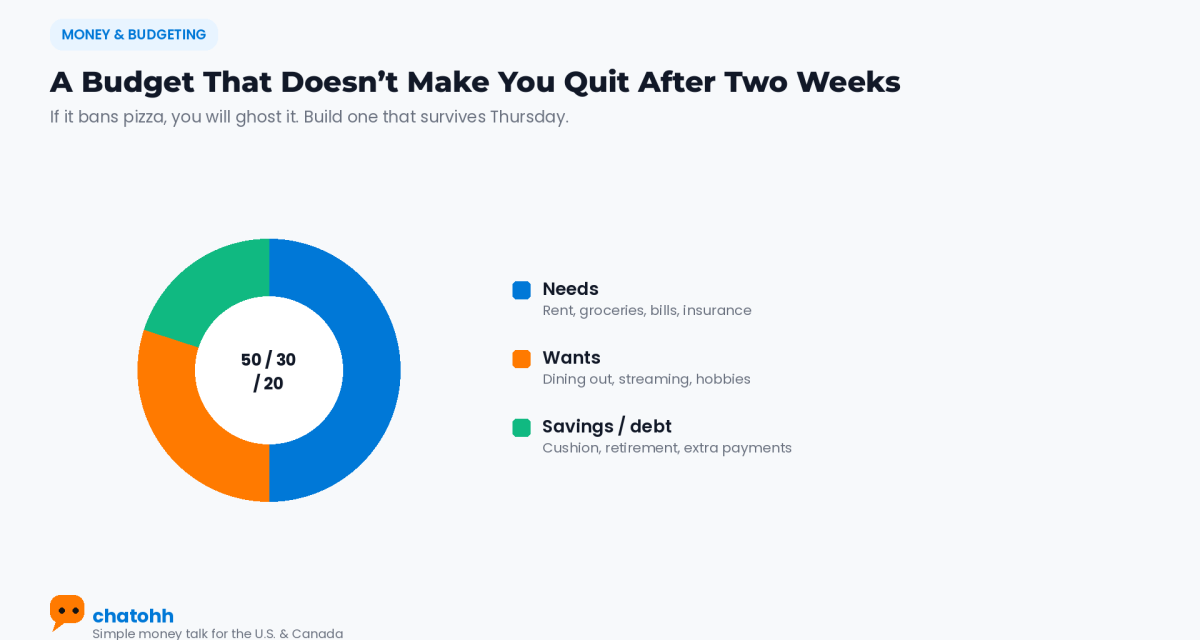
Zero-based budgeting means income minus assignments equals zero. Rent, utilities, insurance, groceries, gas, debt extra, savings, and yes, fun money. If fun money is $0, you will steal from groceries and call it “being bad with money.” You’re not bad. You’re hungry and social.
Pick a fun number you can defend. $40. $150. Whatever is true for your paycheck. Spend it guilt-free. When it’s gone, it’s gone.
Use categories you’ll actually remember
Fifteen categories feels organized. It is how people quit. Try a short list: Housing, Transport, Food, Bills, Debt, Savings, Life. Dump coffee and takeout into Food. Dump Target runs into Life. You can get fancy later. Right now you need something you’ll open on a Tuesday.
Plan for the bills that aren’t monthly
Car insurance every six months. Amazon Prime. School stuff. Christmas. These are not surprises. Divide the yearly cost by 12 and park that amount each paycheck in savings. That’s a sinking fund. It is the difference between “I don’t know what happened” and “yeah, August always has that extra bill.”
Pick a tool you’ll open
Spreadsheet people: spreadsheet. App people in the U.S. often use something like Monarch, YNAB, or Rocket Money. Canadians use the same ideas with their own banks’ apps plus a simple tracker. Paper works. The best budget tool is the one you will look at after a long shift.
If an app costs $15 a month and you ignore it, cancel it. A notes app is free and obedient.
Rebuild mid-month instead of quitting
You will overspend a category. That’s not a funeral. Move money from a category that’s under. Or cut one thing for two weeks. Quitting because Thursday was messy is how you stay paycheck to paycheck with a very organized notes app you don’t open.
Do a 20-minute check every payday. That’s the whole maintenance plan. A budget that can survive a bad week is the only budget worth making.
The two-week survival tweak
Build a “blow-up” line in the budget — $40 or $80 that exists so a random Tuesday doesn’t nuke the plan. When you use it, you don’t quit. You refill it next payday.
Share the budget with a partner as numbers, not accusations. “Here’s what the month can hold” lands better than “you spent too much on snacks.” Same math. Different marriage.