Finance
Paycheck-to-Paycheck Is a Trap. Here’s How Regular Folks Break Out

Paycheck-to-Paycheck Is a Trap. Here’s How Regular Folks Break Out
Paycheck to paycheck doesn’t always mean you’re broke on paper. Sometimes it means your bills, your car, and your leftover lifestyle eat the deposit by Wednesday. You’re working. You’re still one late direct deposit from scrambling. That’s the trap.
Breaking out is less about a huge raise and more about putting space between you and the next bill.
The trap is timing, not just totals
Rent on the 1st. Car on the 3rd. Insurance on the 8th. Groceries whenever. If your paycheck lands on the 15th and the 30th, the first half of the month can feel cursed. A lot of people aren’t overspending by $2,000. They’re mis-timed by $300 and calling it chaos.
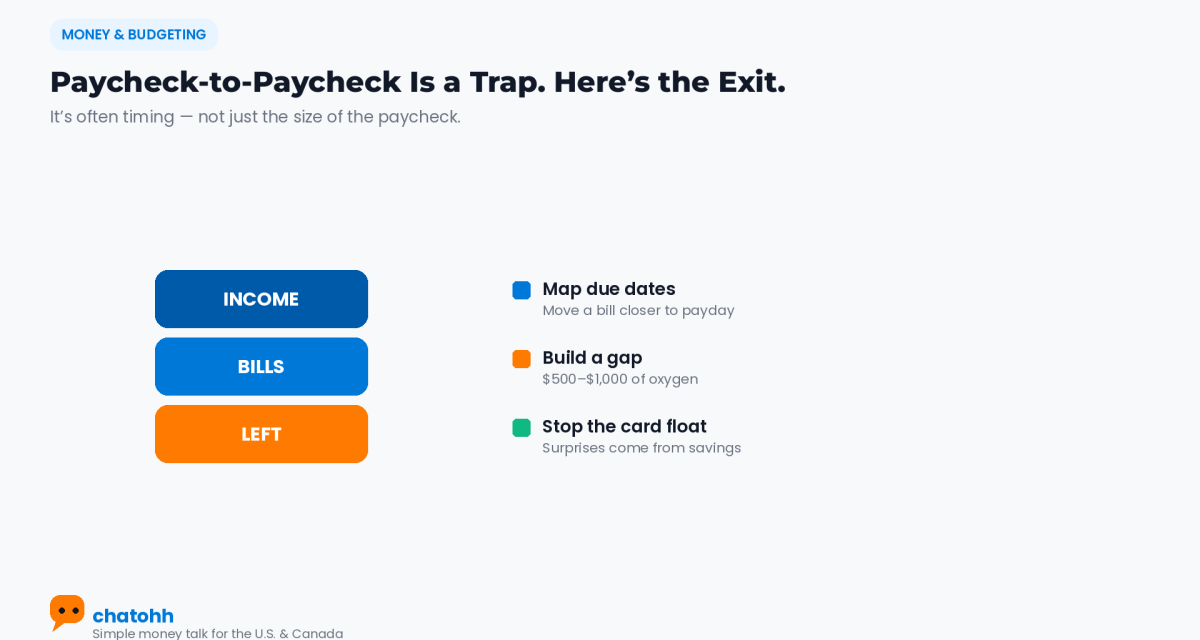
Map paydays against due dates. Call the issuer and move a due date if you can. Plenty of card companies and lenders will do it once. That one change can stop the overdraft shuffle.
Build a gap even if it’s ugly at first
The goal is to stop needing this Friday’s paycheck to cover last Thursday’s life. Sell something. Pick up a couple extra shifts. Pause the non-essentials for 30 days. Park $500 to $1,000 in a separate savings account. That gap is oxygen.
While the gap is small, do not “reward yourself” by draining it. The reward is not hearing your card decline at the gas pump.
Cut the payments that keep you stuck
A $600 car payment plus full coverage on a vehicle that’s mostly a commute is a common reason the math never works. So is a storage unit full of stuff you don’t miss. So is a phone plan from 2019 that nobody has renegotiated.
List every monthly pull over $20. Star the ones that would not change your actual life if they vanished. Kill two. Use that cash to widen the gap or knock down a card.
Stop using credit as the shock absorber
If the card catches every rough week, you don’t have a budget problem only. You have a float. The float has interest. Breaking the cycle means the next surprise comes from savings, even if savings is still tiny, while you stop adding new charges you can’t clear by the due date.
A raise won’t save you if the lifestyle comes with it
Plenty of households make $80k or $90k and still feel hunted. The number went up. The apartment, the car, and the takeout went up faster. When money arrives, freeze your lifestyle for 90 days and route the difference to cash and debt. That’s how a raise becomes an exit, not a nicer trap.
You break paycheck-to-paycheck the same way you leave any trap: make space, stop borrowing for normal life, and keep the space when more money shows up. Unsexy. Effective.
A 14-day cash-flow experiment
For two weeks, pay only bills, groceries, and gas in cash or debit. No new card charges. The goal isn’t purity. It’s seeing whether the month works without the float. If it doesn’t, the float was the budget.
Call one lender and ask to move a due date closer to payday. That 10-minute call has saved more households than a new spreadsheet.