Finance
Zero Based Budgeting Without the Spreadsheet Headache

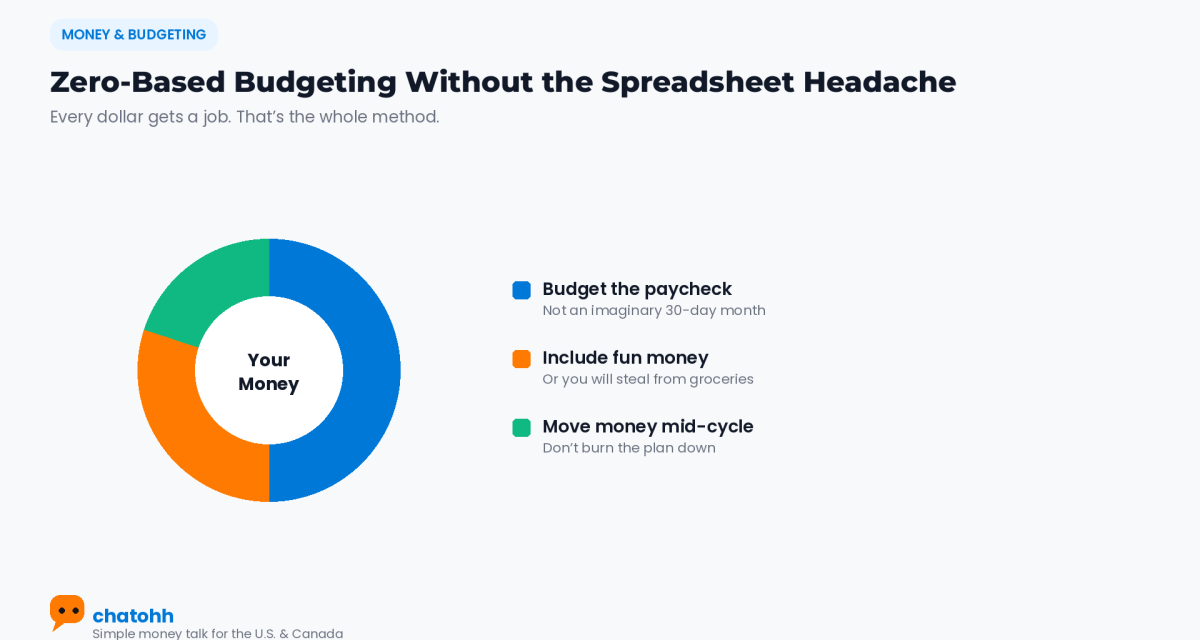
Zero Based Budgeting Without the Spreadsheet Headache
Zero-based budgeting has a serious name and a simple idea: before the month (or the next paycheck) is over, every dollar you get has a job. Bills. Food. Gas. Savings. Fun. Debt. Nothing sits in checking “just in case” and then disappears into Amazon.
You are not creating money. You are assigning it. That’s it.
Paycheck-based is easier than calendar-month-based
If you get paid every two weeks, budget that check, not an imaginary 30-day block. Check hits. Assign it. Next check. Assign that one. Calendar months confuse people who get paid 26 times a year. Don’t fight your pay cycle.
The jobs, in order
- Must-pay bills tied to this check (rent slice, utilities, minimums)
- Groceries and gas so you can function
- A little to savings so the month can’t wipe you
- Extra to the debt you’re targeting
- Fun money so you don’t rebel
- Anything left goes to the next priority, not a mystery
If the check isn’t big enough for all of that, the budget is doing its job — it showed you the shortfall on paper instead of at the register.
You don’t need envelopes unless envelopes help you
Cash envelopes work for some people because swiping feels fake. If cash feels unsafe or inconvenient, use separate savings “pockets” in your bank app or a simple list in your notes. The method is the assignment, not the paper.
When a category blows, you move money
That’s the part gurus skip. Zero-based is not “never overspend.” It’s “overspend on purpose by taking from somewhere else.” Groceries went over? Fun money shrinks. Car repair hit? Pause extra debt for a week. The plan flexes. The plan does not get deleted.
Irregular income is allowed
Freelancers and tipped workers: budget last month’s income, not this month’s hope. Hold a buffer so a slow week doesn’t become a card week. When a fat check lands, assign the extra on paper before you celebrate with a cart full of stuff you didn’t need on Tuesday.
Keep the tool dumb. Four lines on a note per paycheck is a real zero-based budget. A 19-tab spreadsheet you dread is a hobby. Assign the dollars. Live the assignments. Adjust next payday. That’s the whole headache-free version.
A paycheck template you can copy
Take-home: $____. Bills from this check: $____. Food and gas: $____. Savings: $____. Extra to debt: $____. Fun: $____. If the leftover isn’t zero, assign it. If you’re negative, cut fun first, then extras, then stare at the bills honestly.
Do this on payday in five minutes. The method dies when you treat it like a weekend project. It lives when it’s a receipt for the next two weeks.